







April 20 for 20: Arts & Business

As part of our 20 for 20 series celebrating 20 years of keeping Nashville creative, this month we’re spotlighting one of the ideas at the heart of the Arts & Business Council’s mission: the powerful intersection of arts and business.

These two sectors are often framed as separate, but in practice they are deeply interconnected. The arts fuel creativity, innovation, and connection that builds healthier, more engaged communities, while also serving as a vital part of Nashville’s economy. In turn, businesses provide essential services and support, partnership, and investment that help creative enterprises grow and sustain their work. 

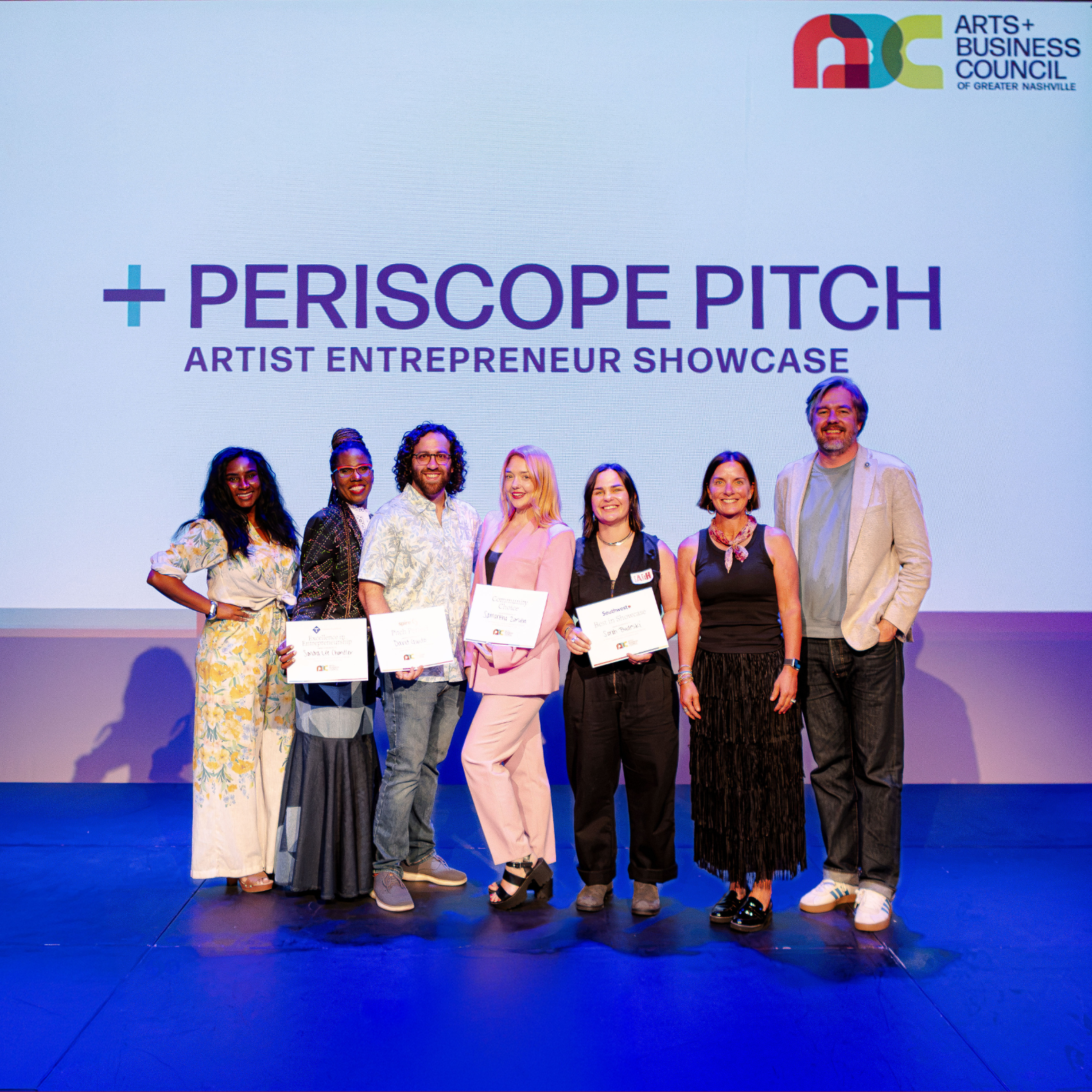
Nashville is also home to a thriving creative economy—extending beyond music to include film, design, fashion, publishing, and other creative industries that are themselves businesses built around artistic work. For many artists and creative entrepreneurs, business skills such as strategy, marketing, legal literacy, and financial planning are also essential tools for building sustainable careers and long-term creative impact—an idea reflected in programs such as Periscope: Artist Entrepreneur Training. At their intersection, arts and business shape a stronger, more vibrant Nashville.

To explore this connection, we invited a group of ABC partners, supporters, and friends to respond to a simple but important question:

How do the arts and business intersect in your work or your organization’s mission?

Their reflections offer a meaningful look at how creativity shows up across industries—from workplace culture and economic development to education, civic life, and community impact.

Alongside these perspectives, we’ve included key data points that help tell the broader story of why this intersection matters. The arts are not only a vital part of our cultural identity—they are also powerful drivers of innovation, economic vitality, and connection.


“At MarketStreet, the intersection of arts and business is foundational to how we create places. We see development as an opportunity to shape experiences and allow people to connect with the neighborhood. This means integrating thoughtful architecture, public art, and hospitality-driven spaces that elevate the everyday experience while driving long-term value. By prioritizing creativity alongside performance, we create environments that attract best-in-class retailers for our residents, customers and visitors. The result is spaces where everyday moments feel special, whether it’s a morning coffee, a walk between meetings, or an evening out. That emotional connection builds loyalty, draws people in, and ultimately drives the success of the Gulch.”

Dirk Melton, MarketStreet Enterprises


72% of Americans believe “The arts provide shared experiences with people of different races, ethnicities, ages, beliefs, and identities.” 63% agree that the arts “help me understand other cultures in my community better”—perspectives observed across all demographic and economic categories.

Americans for the Arts (Top 10 Reasons to Support the Arts in 2024)


“At Holladay Ventures, our mission is to create housing that empowers communities, and art plays a central role in that. For us, art and business intersect through architecture, through spaces that blend creativity with play, and through permanent local art installations like murals throughout our communities. Our goal is to create places that are both beautiful and functional, where residents feel proud to live.”

Evan Holladay, Holladay Ventures


“Leading the Repurpose with Purpose program at Southwest Airlines allows me to bring together creativity, sustainability, and business impact. By transforming retired aircraft seat leather into thoughtfully designed products, the program blends the storytelling and craftsmanship of the arts with the operational scale and purpose-driven strategy of a major airline. This intersection turns what would be waste into meaningful items that extend the life of our aircraft, support small makers and partners, and strengthen our brand’s commitment to community and environmental responsibility. Through this work, art becomes a vehicle for innovation, while business provides the platform to amplify its impact.”

Ana Schwager, Southwest


69% of companies that received national recognition for being a ‘best place to work’ reported the company fosters creativity. Arts and business can work together to create a competitive edge for each other. Leveraging the arts can expand market share and convey a company’s unique values. The arts can also help create livelier and healthier workspaces, while artists and arts organizations gain meaningful work.

Americans for the Arts (The Creative Dividend)


“Bradley is fortunate to partner with the Arts & Business Council of Greater Nashville on a pro bono legal clinic dedicated to providing legal assistance to small businesses and nonprofits in Nashville. Many of the clinic’s participants are artists, and through the clinic, our attorneys are able to assist them with a variety of legal issues, including business formation, intellectual property, and contracts. Commitment to community is a core value at Bradley and providing this service to those who might not otherwise have access to attorneys is one way we can honor our commitment and support Nashville’s arts and business communities.”

Tiffany Graves, Bradley


Arts can enhance a person’s empathy and understanding of human life — capacities typically needed by the best lawyers, and artworks can challenge, incite, or inspire people in diverse ways, even affecting legal career choices. Beyond that, for many law students and lawyers, their finite life is more fulfilling if it includes the arts and the beauties of art.
Yale Law School (What’s Art Doing in a Law Course? Making Better Lawyers)


As a CPA specializing in non-profit organizations, I have the privilege of working with leaders of arts non-profits and helping them better understand the business side of their organizations. As a person who cares deeply about the arts, but isn’t employed in a creative field, being able to support to these organizations brings a tremendous amount of purpose and joy to my career. I believe that having a strong foundation on the business side of things can truly open up mental space for inspiration, creativity, and impact. When I was taking accounting classes and studying for the CPA exams, I never would have imagined that my work could intersect with the arts in such a meaningful way. Accounting gets a bad rap for being a boring job, but there’s nothing boring about supporting artists and arts organizations in our community.”

Abigail Campbell, LBMC


“As a former touring and recording musician, I so value the artistic contribution of my fellow artists and creators. The arts are the guiding light and the heart and soul of the modern world and help keep us grounded, empathetic and human. My goal in supporting the arts as an entertainment attorney through the Entertainment Law Group is to protect artists intellectual property through registering, monitoring and supporting their copyrights and trademarks as well as making sure that artist’s work is properly attributed. Most importantly, artists must be properly compensated for their work both during the creation process and on the back end through fair royalty rates, revenue share and registration of the performance rights for their compositions and creations. Artists must be properly compensated to continue to create and help support themselves and their families during the creation process to produce works that benefit us all.”

Hillel Frankel, Entertainment Law Group


The arts strengthen the economy: the nation’s Arts and Culture sector is a $1.17 trillion industry that supports 5.2 million jobs (2023.) That’s 4.2% of the nation’s economya larger share of GDP than powerhouse sectors such as Transportation, Construction, Education, and Agriculture.

Americans for the Arts (Top 10 Reasons to Support the Arts in 2024)


“Music, visual arts, theater and other creative industries are powerful economic drivers that fuel tourism and create authentic experiences that resonate with visitors. This seamless blend of arts and commerce drives community growth while strengthening Nashville’s brand as a creative hub. We’re grateful for our creative community whose passion and skill help define Music City.”

Deana Ivey, Nashville Convention & Visitors Corp (NCVC)


Nashville’s nonprofit arts and culture sector generates over $588 million in economic activity annually.

Americans for the Arts (Arts & Economic Prosperity 6)


“With Nashville’s nickname as “Music City,” we owe a lot of our brand and reputation as a city to our local arts community. And, as Nashvillians know, it’s not just country music, but several genres that you can find around town. And our arts presence doesn’t end with music. You have comedy, film and TV, and fashion here too, just to name a few. Our diverse economy and robust tourist industry benefit greatly from all the creativity, entertainment, and artistic expression that is happening all over Middle Tennessee.”

Nolan Corder, Nashville Area Chamber of Commerce


Davidson County ranks in the top 1% of counties nationally for arts & culture employees per capita, arts firms per capita, and program revenue.

SMU Data Arts (The Top 40 Most Arts-Vibrant Communities of 2024)


“There is a lot of cross pollination between my two disciplines: artist and operations consultant. My artistic practice benefits from operational tools, supportive structures and strategic partnerships while my consulting work pulls from my knowledge of design and arts nonprofit industries and centers the importance of keeping your creative energy well fed.”

Cara Anne Greene, Greenehouse Consulting


89% of executives agree that creativity is a top skill for today’s workforce. Whether its sparking innovation among employees, showing gratitude for their hard work, or strengthening their skills, arts and business can work together to inspire and engage employees, and help recruit and retain talent.

Americans for the Arts (Quantum Workplace’s Employee Engagement Trends Report)


“Nobody walks into the EC with a finished product. They walk in with something that won’t leave them alone. The mess isn’t in an artist’s studio. It’s in a founder’s laptop. It’s the spreadsheet that doesn’t math yet, the no from an investor, the product that works but hasn’t found its audience. Same struggle. Different medium. Our advisors, staff, and partners don’t clean up the mess. They know that is part of the creative process. They help founders work through it by asking hard questions, introducing new tools, or pushing back until the real solution surfaces. Because here’s what we’ve learned after supporting thousands of founders: the ones who build something real aren’t just building products. They’re telling a story. Here’s what’s broken. Here’s why it matters. Here’s how I fix it. That’s the art of business.”

Sam Davidson, Entrepreneur Center


“Chromatics is built on a 45-year legacy of experience and creative collaborations with renowned artists and designers. We’re anchored by a team of working artists and highly skilled specialists, who build long-standing, creative partnerships with our clients. So we act as an extension of our clients’ businesses. Part of our mission is to partner with our clients to make beautiful prints and reproduce their work with precision and detail. Because we print across multiple media, we can also help provide solutions for the best way to reproduce our clients’ work and help expand their thinking about the possibilities for their art. We want to help our clients leverage growth opportunities as demand for their work increases. We relate to our clients’ struggles and share in their successes. We are artists working for artists.”

Blythe Colvin, Chromatics


Creativity in your job means more success in your work place. More than half of employed American adults agree that their job requires them to be creative, and an even greater proportion believe the more creative and innovative they are at their job, the more successful they are in the workplace.

Americans for the Arts (Americans Speak Out About the Arts in 2023)


“Art moves people and culture forward. Business builds the structures that allow those ideas to live and grow in the real world. They need each other, and when they work together, creativity becomes infrastructure. Through my work with Collab Music, I design collaborative systems that bring value and validation to music creators whose work shapes our world through TV, film, and advertising, while training thousands more creators to enter sync licensing.”

Mimi McCarley, Collab Music